
If you sell products online and run Shopping ads, there is a new badge to know about. Google Ads has published a help page called About purchase signal annotations. It describes badges that show purchase volume, such as “100+ sold last 30 days”, on eligible Shopping ads. Search Engine Land covered the new documentation on 23 November 2026.
You cannot switch the badge on yourself. Google shows it automatically, and only if your conversion tracking sends product-level sales data. Below is what Google’s help pages say, followed by our practical checklist.
What are purchase signal annotations?
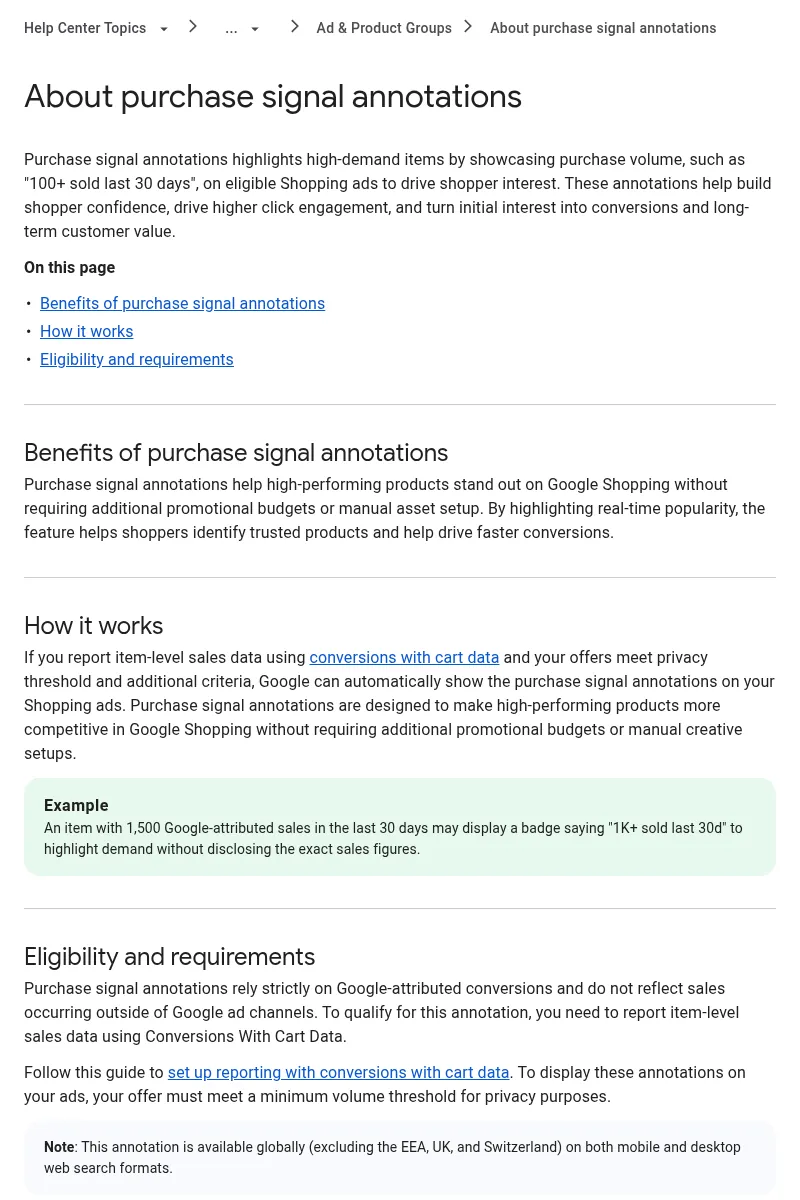
Google describes purchase signal annotations as a way to highlight “high-demand items by showcasing purchase volume” on eligible Shopping ads. Google says they help popular products stand out “without requiring additional promotional budgets or manual asset setup”.
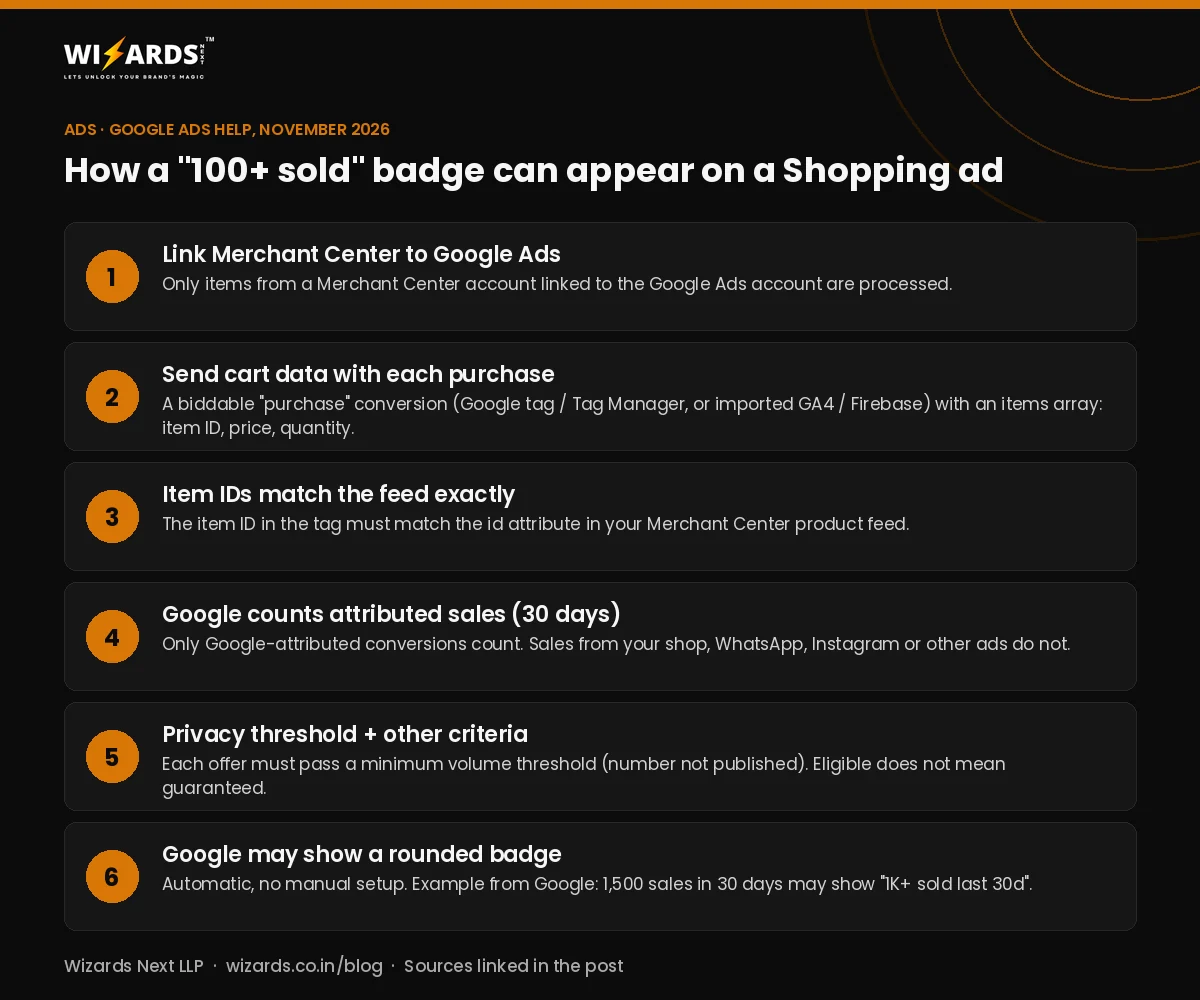
Google gives one example. An item with 1,500 Google-attributed sales in the last 30 days may show a badge saying “1K+ sold last 30d”. The number is rounded, so shoppers see that the product is popular but not your exact sales.
Who is eligible, and does it work in India?
According to the help page, three conditions apply:
- Item-level sales data: you must report sales with conversions with cart data.
- A privacy threshold: each offer must meet a minimum sales volume “for privacy purposes”. Google does not publish the number, and it also mentions “additional criteria”.
- Where it shows: Google says the annotation is available globally, excluding the EEA, UK and Switzerland, on mobile and desktop web search formats. India is not excluded.
Meeting the conditions makes a product eligible, but the badge is not guaranteed. Google’s wording is that it “can automatically show” the annotation.
Only Google-attributed sales count
This is the most important detail for Indian sellers. Google says the annotations “rely strictly on Google-attributed conversions and do not reflect sales occurring outside of Google ad channels”. Orders from your shop counter, WhatsApp, Instagram, marketplaces or other ad platforms do not add to the number. A product that sells well offline can still show no badge, or a small number, on Google.
What conversions with cart data needs
Conversions with cart data is an extension to normal conversion tracking. Along with the purchase, it sends the products in each order. Google’s requirements include:
- A linked Merchant Center account. Google only processes items from a Merchant Center ID that is linked to the Google Ads account.
- Matching item IDs. The item IDs in your conversion tag must exactly match the id attribute in your Merchant Center feed. Google Ads diagnostics lists the IDs that do not match.
- A biddable purchase conversion. It can come from the Google tag or Google Tag Manager, or from Google Analytics 4, Firebase or Search Ads 360 conversions imported into Google Ads.
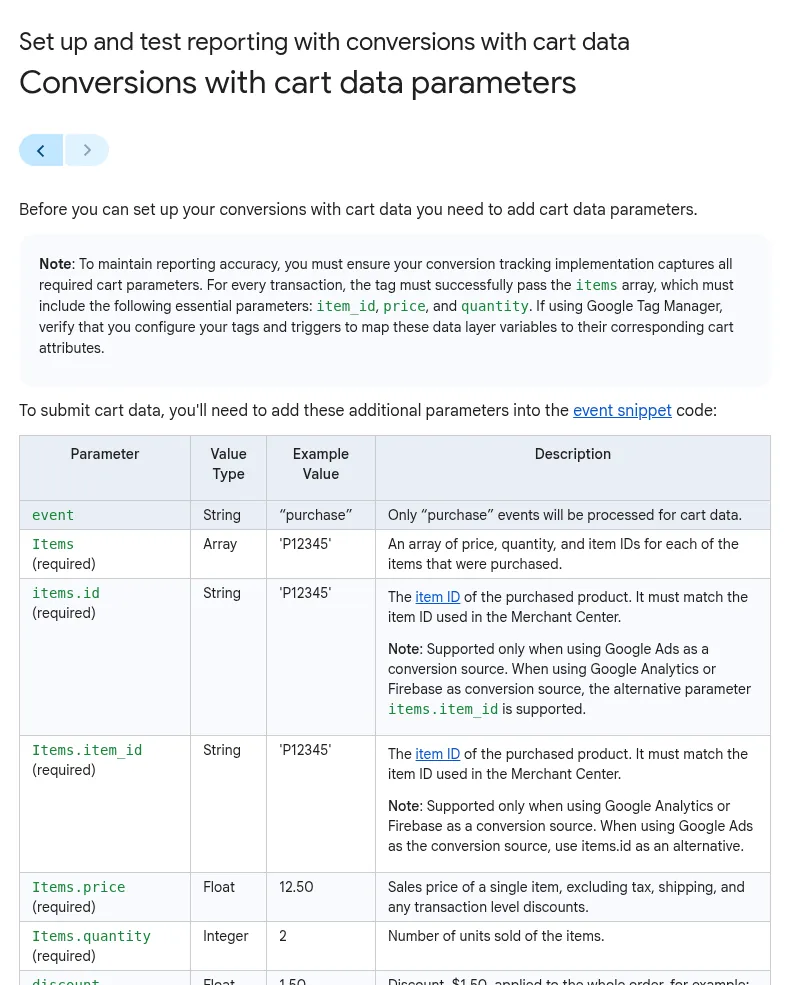
- The right parameters. Google’s parameter table says only “purchase” events are processed for cart data. Each item needs an ID, a price (excluding tax, shipping and order-level discounts) and a quantity.
Cart data also gives you better reports, which are useful even without the badge. Google lists revenue and profit by campaign, items sold, cart size, average order value and cross-sell reports for Shopping ads. If you add cost of goods sold to your feed, you also get gross profit metrics.
Our checklist for online sellers
- Check that Merchant Center is linked to the right Google Ads account. Agencies and freelancers sometimes link a different account by mistake.
- Place a test order and check the purchase tag. Make sure the items array has the same product IDs as your feed. Shopify, WooCommerce and custom carts often use different IDs for variants such as size or colour.
- Send price without tax and shipping, as Google’s table asks.
- Look at the conversion action’s diagnostics in Google Ads for item ID mismatches, then fix the tag rather than the feed.
- Don’t promise clients or bosses a badge. The threshold is not published, and only Google-attributed sales count.
- Keep product titles and images honest. The badge only helps if shoppers trust what they see after they click.
Product feeds and landing pages matter more and more for Google’s automated ads. Read our posts on Performance Max using landing page images and the Book Appointment conversion goal for other tracking changes this month.
Where Wizards can help
Our Google and Meta ads management team sets up conversion tracking, Merchant Center feeds and Shopping campaigns. Our e-commerce website development in Varanasi team builds stores with clean product IDs and tags from day one. If you are a brand looking for a digital marketing agency in Varanasi or a Google Ads agency in Varanasi, book a call and we will check your cart data setup with you.
Frequently asked questions
What are purchase signal annotations in Google Ads?
They are automatic badges on eligible Shopping ads that show recent purchase volume, such as “100+ sold last 30 days”. Google rounds the number. Its example: 1,500 Google-attributed sales in 30 days may show “1K+ sold last 30d”.
How do I get the “sold last 30 days” badge on my Shopping ads?
There is no manual setting. Google says you need to report item-level sales with conversions with cart data, and each offer must meet a minimum volume threshold for privacy and other criteria. Even then, Google may or may not show the badge.
Are purchase signal annotations available in India?
Google’s help page says the annotation is available globally, excluding the EEA, UK and Switzerland, on mobile and desktop web search formats. India is not in the excluded list.
Do sales from my shop or WhatsApp count towards the badge?
No. Google says the annotations rely strictly on Google-attributed conversions and do not reflect sales outside Google ad channels.
Sources
- Google Ads Help: About purchase signal annotations
- Google Ads Help: About conversions with cart data
- Google Ads Help: Conversions with cart data parameters
- Google Ads Help: Set up and test reporting with conversions with cart data
- Search Engine Land: Google Ads introduces purchase volume badges for Shopping ads (23 Nov 2026)
Written by Ravi Khetan, Founder, Wizards Next LLP, a digital marketing agency in Varanasi. About us